Working papers
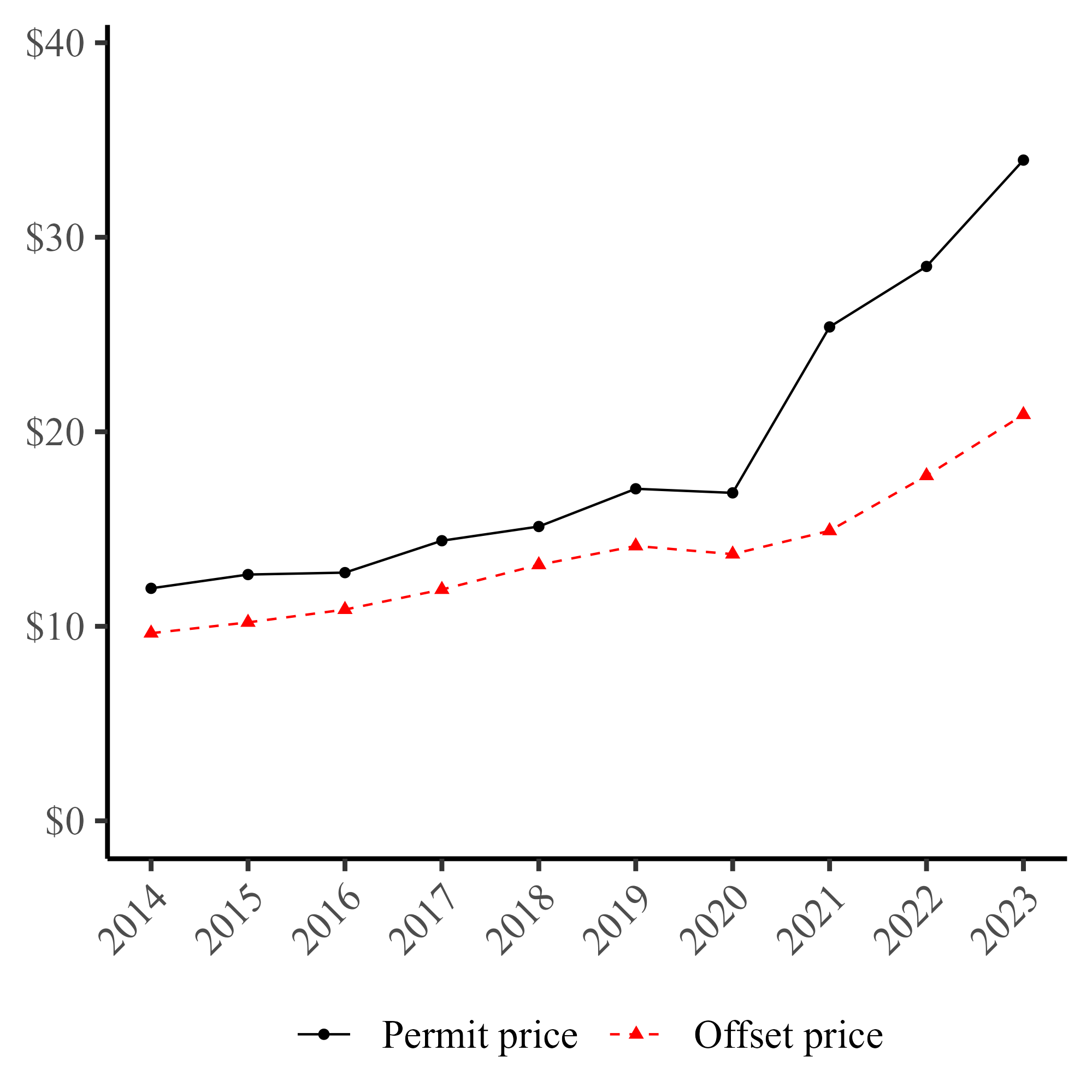
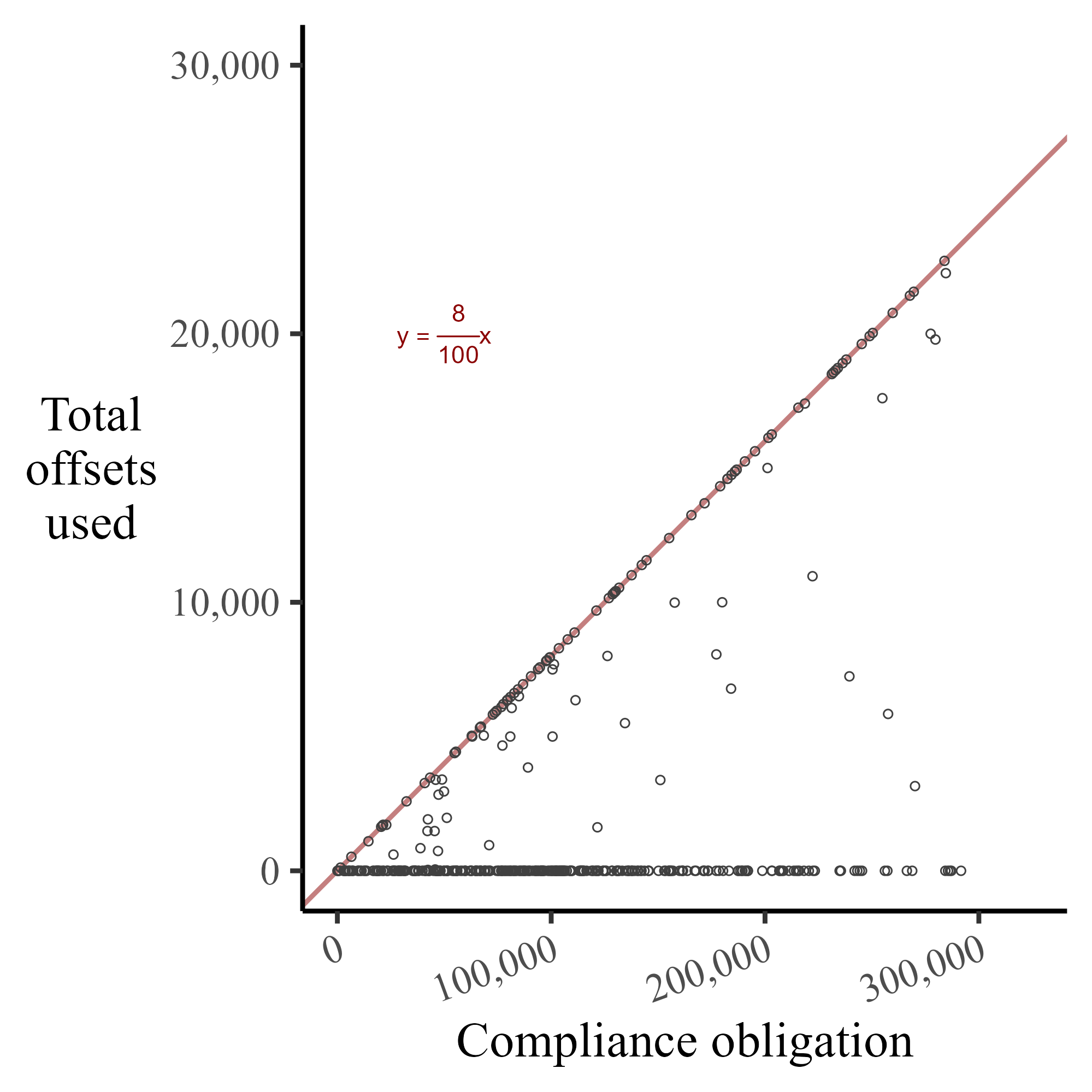
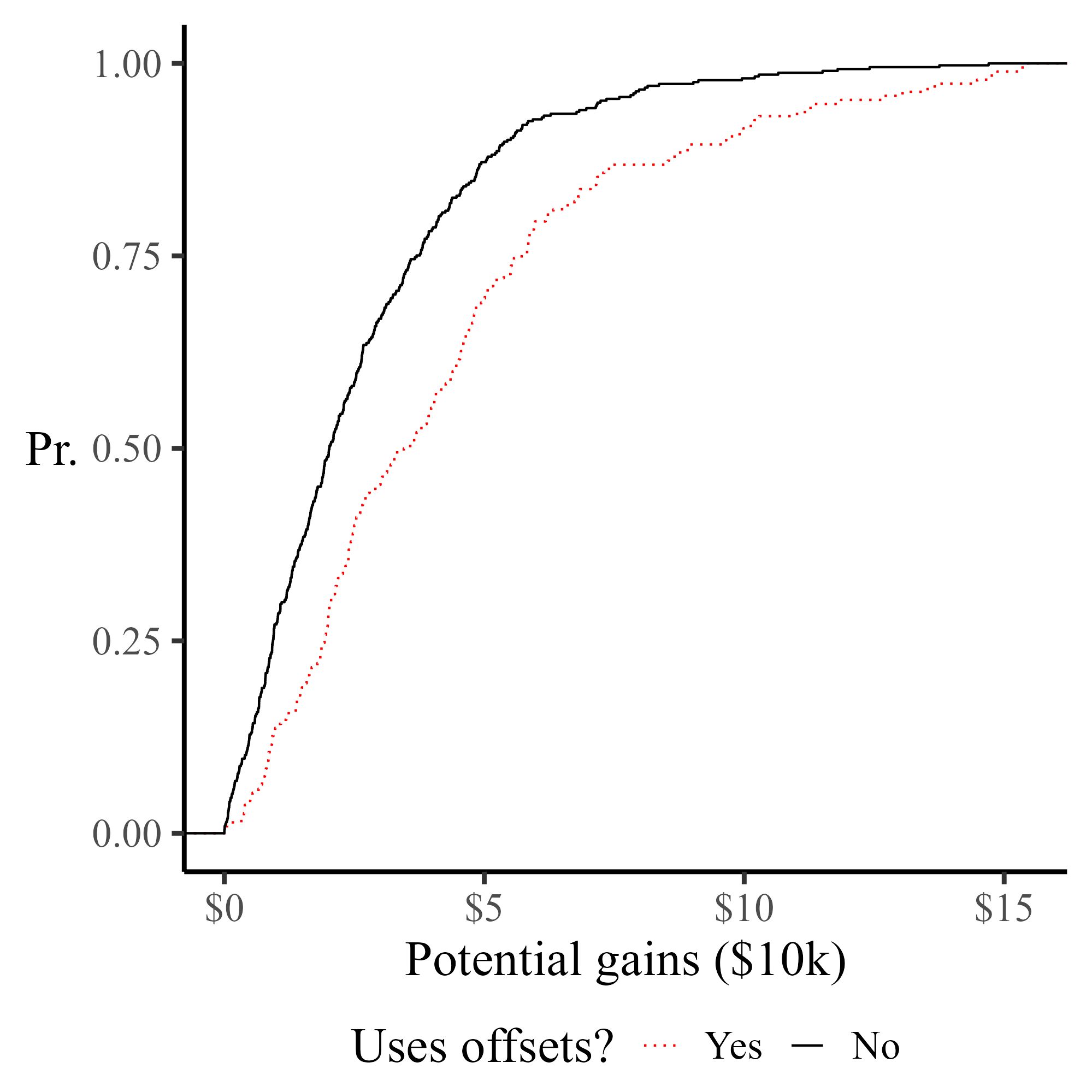
Emissions offsets remain an underutilized compliance instrument in California's cap-and-trade program despite trading at substantial discounts---sometimes less than two-thirds the price of a permit. A majority (50-75%) of firms never purchase an offset, leaving significant cost savings on the table. Using compliance data from 2013-2021, I identify fixed transaction costs as the primary barrier, and it is a substantial one---averaging over $220,600 in the energy generation sector to over $835,600 for general emitters. But this value is heavily skewed; median transaction cost estimates for first-time offset users in these same sectors are about $47,440 and $64,720, respectively, suggesting the average cost is driven by a few high-cost firms. Using the median cost estimates, I estimate that firms implicitly paid over $8 million in total transaction costs during the study period. Moreover, relative to a frictionless market, these barriers caused firms to forego nearly $40 million in potential cost savings. Whether these are search costs, risk premiums, or public relations concerns is still ambiguous; the paper ends by noting potential future directions of research.
Works in progress
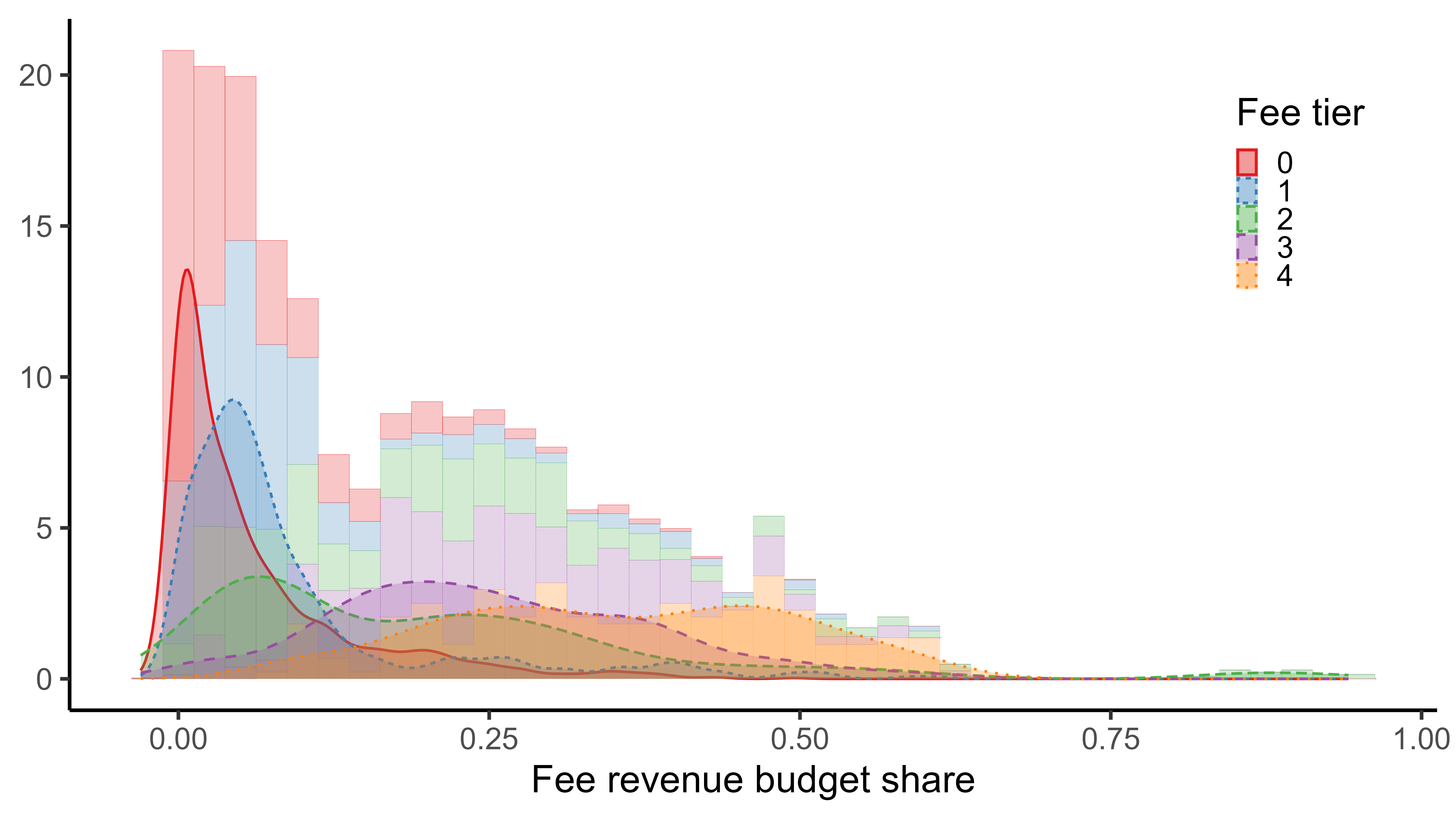
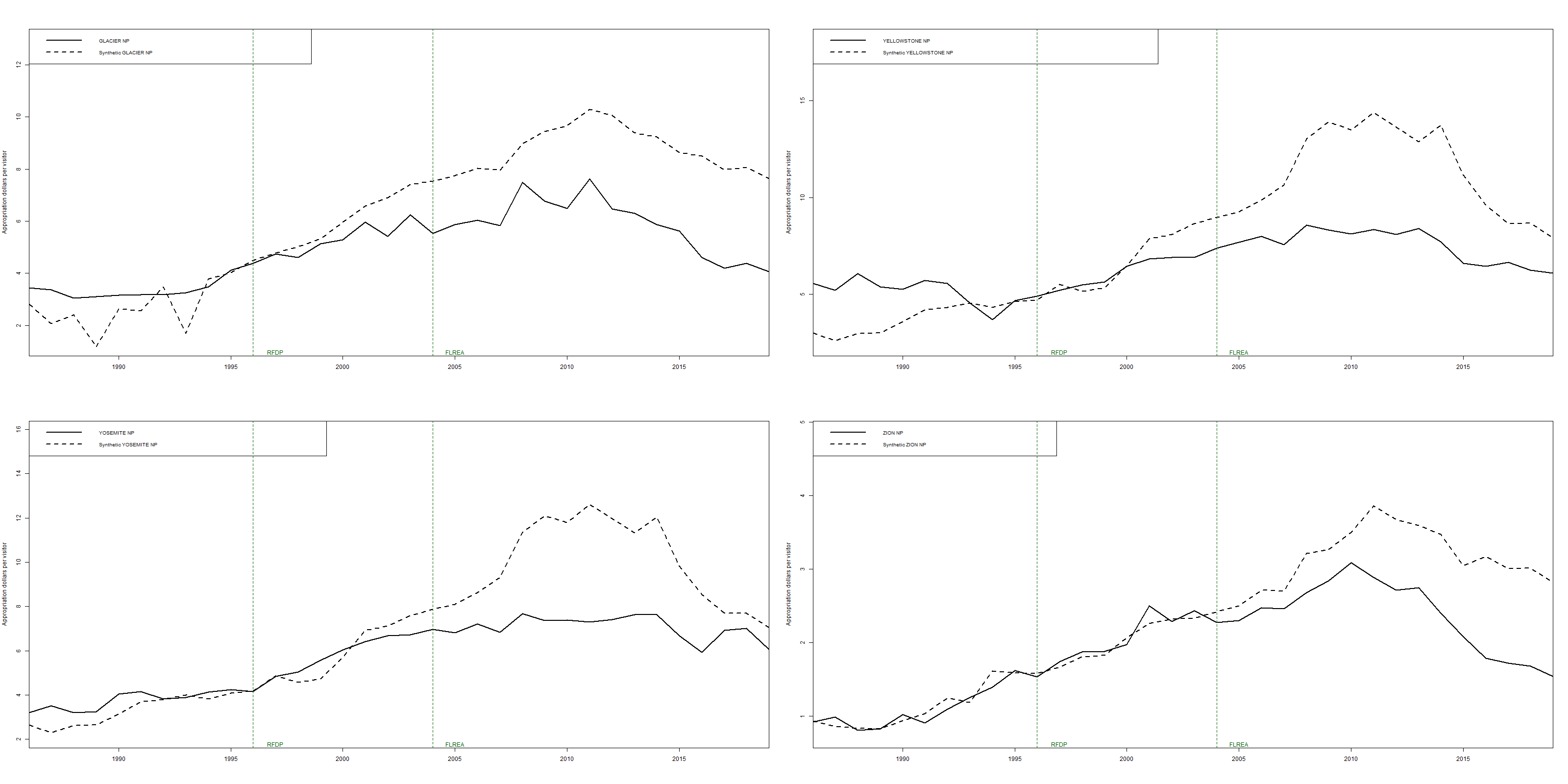
The Federal Land Recreation Enhancement Act (FLREA) of 2004 gave park managers greater control over how user fees were collected and used within parks. At the same time, the public became concerned that it might decrease central appropriation dollars to those same parks. I digitize official National Park Service (NPS) documents to create a dataset containing over 10,000 park-year observations spanning 1986-2019, and empirically test for crowding out of central appropriations by comparing fee-charging parks to non-fee-charging parks before and after FLREA. My findings offer cautiously optimistic news to NPS policymakers: there is little evidence that FLREA led to systematic crowding out of federal appropriations. That is, there is no obvious empirical evidence that the amount of money apppropriated to parks collecting fees changed in a more or less drastic way than those parks not collecting user fees.